It's really easy to go to someone to ask for a recommendation letter. You find an adult who you feel knows your potential and would be able to write a few good things about you. But what happens when the tables are turned? What happens when your the one who has to write a recommendation letter? Oh sure you might think it's easy because you know the person, you know their potential, and you really want to sell them. What happens when the person you are writing a letter for is you? Suddenly it's not so easy; how do I write a letter to recommend myself without sounding full of myself?
Writing a recommendation letter for my E-Folio was harder then I thought. I wasn't sure how I would write it even though I knew what I wanted to say. After I wrote it, I felt this was a wonderful activity because it allowed me to sell who I was, and be proud of the work I have accomplished this year.
Wednesday, May 11, 2011

Monday, May 9, 2011
Chapter 14 Questions
If I was doing a PowerPoint on my philosophy of teaching science I would make sure respect is a major character. You can't have a class without respect from both parties. I believe that every child is unique and they are the way to our future. I would want my students to express themselves and feel free to explore. I would show this in a PowerPoint by having pictures and quotes.

I am very interested in the certifications offered by the National Board for Professional Teaching Standards because I feel there is a lot of useful information. Their website is packed with all different things for education. Check it out: National Board for Professional Teaching Standards. I believe "We teach who we are" means that teachers teach based off what they are comfortable with. They go off the way they were taught, what they liked and what they didn't like. It is important to be reflective on ourselves as teachers so we can always try to better ourselves. There is always room for improvement and it's good to look back on the day to see what could be changed to make things go smoother.
Chapter 13 Questions
Since I am creating a portfolio for my science class I will put what we should have in ours. We should have an opening page, a scientific me page, a page for our different activities, a page for out blog, a page for our lesson plan, and pages that we think belong in there. Our portfolios should be personal to us and show who we are through an educational standpoint.


It is important to use multiple forms of assessment because students take to different things. I know I am a horrible test taker because I psych myself out before hand. I second guess myself and change my answers and usually don't do well on them. I prefer getting assessed through an essay or a project. That is just the way I am; but there are other students who thrive for tests and go horribly on projects. We are all different, we learn differently, so we should have options to get assessed differently. I have seen so many different types of presentations from all sorts of technology resources. I hope that I can incorporate all of these tools into my classroom because they all have something fascinating to offer. Writing in a science or math course does not surprise me. I have written essays for both classes and they proved to be useful. I had to research a topic and then write my opinion on it. By writing on the topic, allowed me to research deeper and give me a better understanding of it. Blogging about the earthworms is easy to incorporate into the classroom. For my blog about earthworms I put pictures, videos, and experiments I found online. I then reflected on what I learned about earthworms. I found this activity very insightful and useful!

Chapter 11/12 Questions

Cooperative learning is a successful teaching strategy in which small teams, each with students of different levels of ability, use a variety of learning activities to improve their understanding of a subject. Each team member is responsible for their material and helping their teammates learn. This atmosphere gives the student a sense of accomplishment.I found this information based off my research:
Cooperative efforts result in participants striving for mutual benefit so that all group members:
- gain from each other's efforts. (Your success benefits me and my success benefits you.)
- recognize that all group members share a common fate. (We all sink or swim together here.)
- know that one's performance is mutually caused by oneself and one's team members. (We can not do it without you.)
- feel proud and jointly celebrate when a group member is recognized for achievement. (We all congratulate you on your accomplishment!).
We should plan because it gives us a skeleton of what we want to do. Teaching is all about flexibility and a lot of things don't stick to plan, but having one will give you a guideline of what you want to try and accomplish in the day.

It is important to have a group of diverse members because each student can bring something different. They can help each other understand what is being said and they will all learn different things from different backgrounds.

I don't remember a teacher who was especially good at making us think by asking asking questions. All my teachers encouraged asking questions and would never come right out and say what the answer was. they would respond by asking us a question to have us think more about it or have our peers help us out.
**Some of the other questions were answered in previous weeks**
**Some of the other questions were answered in previous weeks**
Chapter 10 Questions
Students can get more control of their own learning if there are student based activities. When students work in groups they control the atmosphere and what work gets done. The teacher walks around the room to monitor the students progress but usually just let the students take over.
 It is important to learn the history of science because students should know how it all came to be. Sometimes when background information is shared on the topic students understand why it is the way it is and wont be so closed minded to it.
Mystery boxes were some of my favorite things to do in school. My teacher had a box filled with all different objects and you got to put your hand it to try and guess what was in it. Another mystery box we had was to guess how many objects were in the box. We got to move the box in whatever way we wanted too but we were not allowed to look inside. This built my scientific skills because we had to use knowledge we already had on objects and try to figure out what was inside by its shape and size.
 Building models allows thee students to go abstract. If a teacher stops them at a drawing then they are only getting a 2D point of view. If they design and build they will be able to see what they are learning in a 3D perspective.

Mystery boxes were some of my favorite things to do in school. My teacher had a box filled with all different objects and you got to put your hand it to try and guess what was in it. Another mystery box we had was to guess how many objects were in the box. We got to move the box in whatever way we wanted too but we were not allowed to look inside. This built my scientific skills because we had to use knowledge we already had on objects and try to figure out what was inside by its shape and size.

Chapter 9 Questions

What is meant by constructivism? Constructivism refers to the idea that learners construct knowledge for themselves. Building a model is constructive because the student is creating it on their own. They get the research for it and build it the way they interpret the information. Creation is the top of the pyramid for learning because the student learns at their own pace and eventually teach others what they learned.

First graders can become moon observers by simply going outside with a parent to look up in the sky. They can see the shape of the moon, the color, the size, all different things. They don't necessarily have to keep a journal but they can ask their guardian questions about it and maybe spark their interest in outer space. If I was standing on the moon looking out at Earth the Earth would look the same to me as if I was on Earth looking at the moon. The Earth is spinning at the same speed as the moon and goes through the same phases. The only difference is that the Earth's rotation and phases would be opposite of the moons'. If the moon was at 3/4 then the Earth would be at 1/4.

Having students make solar system models with fruits and vegetables allows the students to learn the solar system through constructivism. Students will have the opportunity to find information on outer space. The child making the model can do it hands on to understand the different sizes and how they look up in the sky. The virtual model of the solar system can increase the students learning experience but making it will allow them to have a full understanding.
Chapter 8 Questions

Schools that demand an exact adherence to a specified curriculum run the risk of losing important moments for learning and teaching because there is no flexibility. Like I stated in the previous chapters’ teachers have to teach to a test and can’t allow room for creativity and exploration. Moments that allow students and teachers to go off task to discuss or discover something new are the moments teachers live for. But it seems like that has all disappeared and everything is mechanic now.
I would define the sinking floating lessons as inquiry lessons. It allows the students to ask questions and make discovers off their questions. For the Dead Sea lesson I would think the students would ask how deep the water is, how big the water is, and if there is anything living in it. I would also expect a question asking where the Dead Sea is located. I would structure my lesson around the floating and sinking of the hard boiled egg. I would ask the students to give me their reasoning to why the egg sank in regular water but floated in salt water. I would then move onto the Dead Sea and ask the students if they know what it is. After they given me their answers I will go into how the Dead Sea is saltier than the ocean. I will ask the students to tell me what they know about the ocean and then have them research some information on the sea. After everything is completed I will ask them to compare and contrast an ocean to the Dead Sea. My ultimate goal is to have the students understand that when there is a high salt content things float. They will be able to see that the ocean isn’t that salty if they can swim in the ocean. If they were to go into the Dead Sea all they would be able to do is float and not swim.
Thinking back to my science experience in school I remember studying plants vs. animals in almost every grade. We went through the systems that are found within the organisms, later on in school years we would draw pictures of the cells, do projects on them, and then eventually in the higher grades look at the cells under microscopes. The spiraling curriculum has helped me because each year I learn something new to add onto my stack of knowledge.
Chapter 7 Questions

Our technological revolution has made it difficult for us to distinguish what is living and what is nonliving because something that is nonliving can be used to show something living. Before we had modern technology students could plant seeds and watch them grow in the classroom, they could have an earthworm tank, or eve dissect a frog. With our modern technology they don’t have to do that anymore they can just go on the computer and watch a video of it being done and have it be completely virtual. When a person is in the situation first hand they might not be able to tell the difference between living and non living because they always watch it over a screen.
In my area I have a lot of wild flowers. We have wild tiger lilies and sunflowers. I could dig some up and plant them in a flowerpot to bring in. I would encourage the students to think about how the flowers got there. What made them wild? How do my neighbors flowers end up in my garden?
I think if a student is intrigued by something at a younger age it will stick with them as they get older and they would want to learn more about it. Inquiry based explorations has the students asking questions and by allowing the child to explore their own questions to come up with their own answers will have the students wanting to learn more.
Chapter 6 Questions

Koch describes messiness in the classroom as a wonderful thing. Teachers want students to be engaged and eager to explore their questions to create some solutions; but as most teachers soon learn it is hard to get students excited about science. She describes a classroom she went into to do some experiments. The class was very quiet and very neat. Her experiments required the students to move around and get dirty and figured they would not get a meaningful exploration in that environment. Children can see that the answers in science aren’t always neat. Our lives aren’t always neat and a messy room is just part of doing science.
I think this quote is showing us that many teachers use order. They want to hand the students the information they need to know without allowing the students to explore. Teachers take away all the creativity because they have to stay on schedule and teach to state tests. We hand the information to students because they cannot spend too much time in a particular thing. I think when she talks about viewing as an outsider she means that the students are strangers to the information and by not allowing them to get creative and get into the topic they will continue to be strangers because all they are getting, is it drilled in their heads.
If I cannot answer a question my students ask me I can do a number of different things. I can look up the answer myself to tell them. I can have them research their question while I research it and we can combine what we find. I can have them ask their peers or another adult. There are many different ways to go about helping a student with their questions; the teacher just has to choose the right method.
Saturday, May 7, 2011
Chapter 5 Questions

1. There are some scientfic topics I remember studying about during school that dealt with the enviromnet around me. I remember the fossil unit I learned in elemntary school, it talked about the different fossils found in New York State. My uncle is an acreologist and I called him when we started the unit. He sent me a huge box filled with all different types of minerals and fossils he found around our area. He told me to bring it into the my class to let my teacher used. I thought it was really cool, he gave me enough for each student to have theeir own personal rock that had something different in it wheather it be a fossil or a gem. Another topic I remember was learning about the different things that live in the Erie Canal. We went there for a field trp and we all got a piece of coal to bring home. There were diffeent stations there was the water staion that had us do hands on activities with a tank with the different types of things living in the water. There was an insect station that a lot of people didn't like because they don't like touching bugs. The coal station was fun because I remember learning about the coal mine and the process of what happens underneath. I found all the different activities we did very useful because it allowed me to go and experience everything first hand.
2. It is important to connect things to students' everyday lives because it is something they can relate too. If the teacher connects it to something the students have no knowledge on then the student doesn't obtain the information. If it is connect to something in their lives they will be able to remember whaat was being taught because they can look back and be connect to an experience they haave had. This is a way of learning because the students can associate things in the classroom to things in theiur lives.
3.I feel naturalistic intelligence isn't any more sepcecial then the other intelligences out there. They all have a unique quality that makes the different from one another. Naturalistic intelligence is when a person has the ability to identify and classify things in nature. It is something special to connect with nature and be known as a "Nature Lover" but like I said I feel all the intelligences are just as special.
4.I feel it is important for steudents to learn about greeen science because it is important to learn about the environment. We are the generation that can change the future with global warming and have the knowledge on what we are doing in the environment. By learning greeen science the students can learn ways to help their local envrionment.
5.I think the fields trips I took when I waas younger would of been more meaningful to me if it was stressed that it waas right in my back yard. The field trips we went on were mostly close by and if I understood then what I know now how everything happened at those places has affect history I would have been like wow.
Chapter 4 Questions
1. According to the textbook an observation is the perception of an object or an event, using as many senses as possible. Inference is a reasonable explanation that we construct on the basis of our observations. Inferences sometimes lead us to set up further investigations. For example one can observe that the sky is gray and make an inference that it is going to rain.
2.There are six science process skills
3. It is important to construct students in planning instead of just conducting because it allows the students to process the information. By planning, the students can formulate an idea and a plan of action that they want to follow. If a teacher jumps into just conducting an experiment the student has no time to process information about the experiment and goes into it blind sided.
4.If I had a video microscope in the classroom I would set up a plant station. I would have the students learn the structure and functions of a plant cell and its parts. The video would allow the students to see the cell system and how the different things within the system moves around the cell
2.There are six science process skills
- Observation
- Communication
- Classification
- Measurement
- Inference
- Prediction
3. It is important to construct students in planning instead of just conducting because it allows the students to process the information. By planning, the students can formulate an idea and a plan of action that they want to follow. If a teacher jumps into just conducting an experiment the student has no time to process information about the experiment and goes into it blind sided.
4.If I had a video microscope in the classroom I would set up a plant station. I would have the students learn the structure and functions of a plant cell and its parts. The video would allow the students to see the cell system and how the different things within the system moves around the cell
Tuesday, April 26, 2011
Are Eathworms Important?
"...it may be doubted if there are any other animals which have played such an important part in the history of the world as these lowly organized creatures."


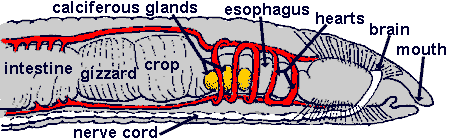
Earthworms plow soil by tunneling through it. Their tunnels provide the soil with passageways through which air and water can circulate, and that's important because soil microorganisms and plant roots need air and water. Without some kind of plowing, soil becomes compacted, air and water can't circulate in it, and plant roots can't penetrate it. One study showed that each year on an acre of average cultivated land, 16,000 pounds of soil pass through earthworm guts and are deposited atop the soil (30,000 pounds) in really wormy soil. Earthworm poop, called castings when deposited atop the ground are rich in nitrogen, calcium, magnesium, and phosphorus, these are all important nutrients for healthy, prospering ecosystems. In your own backyard you might be able to confirm that grass around earthworm burrows grows taller and greener than grass just inches away. When it rains earthworms are found all over the pavement. You will find they are everywhere but the grass. This is because when it rains the land gets filled and the worms have to get out of the water. When the rain stops they have a limited time to get back to the grass and into their tunnels because they either become bird food or get dried out by the sun! A typical behavior is to tunnel deeper into the soil, to where conditions aren't so extreme. At a fair depth they roll themselves into balls and excrete mucous around themselves, creating a kind of cocoon. In this state their body functions slow down. They go into a kind of suspended animation, just waiting for soil conditions to improve. At a fair depth they roll themselves into balls and excrete mucous around themselves, creating a kind of cocoon. In this state their body functions slow down drastically. They wait in this state until the soil conditions improve.
Construction of an Earthworm
Behavior and Adaptaions Lab | |||||||||||||||||||||||||||||||
| OVERVIEW: Students will work in groups of four to conduct experiments related to the behaviors and adaptations that earthworms have developed for survival in the environment. Two groups of students will conduct experiments related to earthworm reactions to light, two groups will examine moisture preferences, and two will study earthworm responses to odors. At the end of the session students will share results with other groups and discuss their findings in the context of animal adaptations to the environment. TERMS USED: Process related—experiment, control, observation, hypothesis, comparison, classification, prediction, independent variable, inference, data Content related—adaptation, annelid, behavior, burrows, clitellum, consumer, earthworm, environment, food web, gizzard, hermaphrodite, humus, instinct, invertebrate, learning, mucus, nocturnal, nutrients, oligochaetologist, reaction; phylum, setae OUTLINE OF ACTIVITY: In the first half of the workshop we will review previous material and then highlight a researcher at SREL (Karen Gaines) who studies animal behavior. Given the nature of her work (she studies animal populations and communities) we will use slides to introduce the students to “the parts of an ecosystem.” Many of these concepts will be covered in more detail in Activity 5 (e.g., food chains, food webs, predators, prey). In the slide program we will also emphasize that an adaptation is a body part or a behavior that helps an organism meet its needs. In the experiments the students will conduct on worms (see below) the primary emphasis is on how the worm’s behaviors (in addition to its body parts) adapt it to its environment. For the hands-on activity students will work in pairs, with the pairs at a given table conducting the same experiment to ensure replication. Four pairs of students (2 tables of 4 students each) will conduct an experiment using light, another set of 8 students will conduct an experiment using moisture, and a third group will conduct trials using odor. For each experiment the pair of students will make a prediction of the worm’s behavior, and then test four worms in the experimental chambers. Each trial should take approximately 15 minutes (2 trials/experiment). While students are waiting for the experiments to finish they will observe and make notes on worm behavior. After each pair/group has completed their designated experiment the pairs, groups, and entire class will share results.   | |||||||||||||||||||||||||||||||
**I got this lab at http://www.uga.edu/srel/kidsdoscience/kidsdoscience-behavior.htm**
Monday, April 25, 2011
Field Work

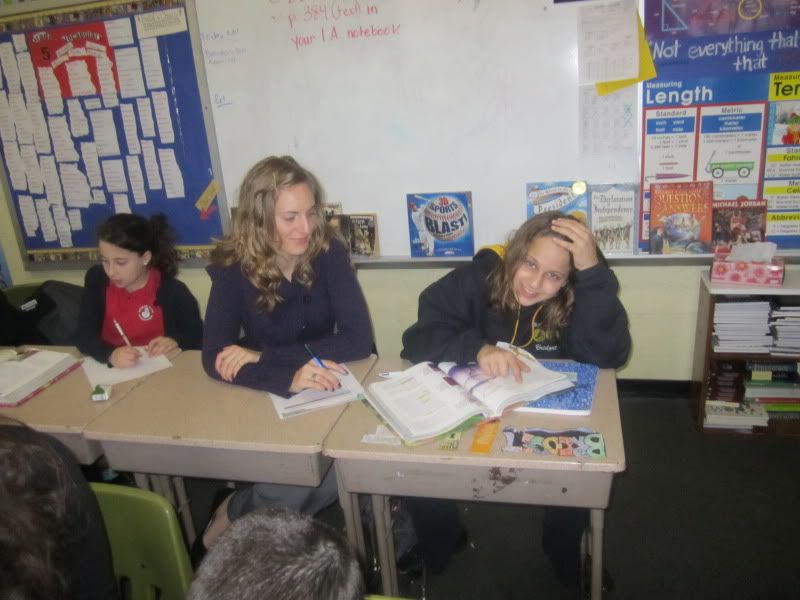
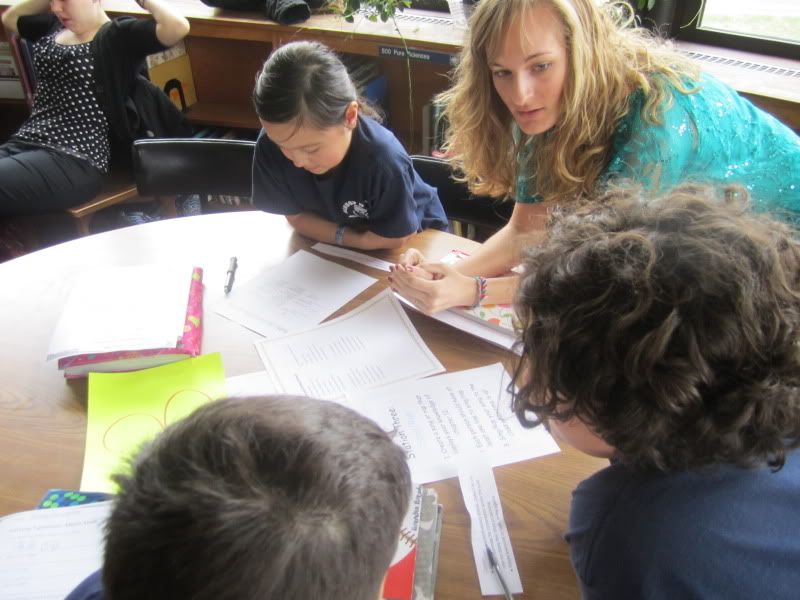
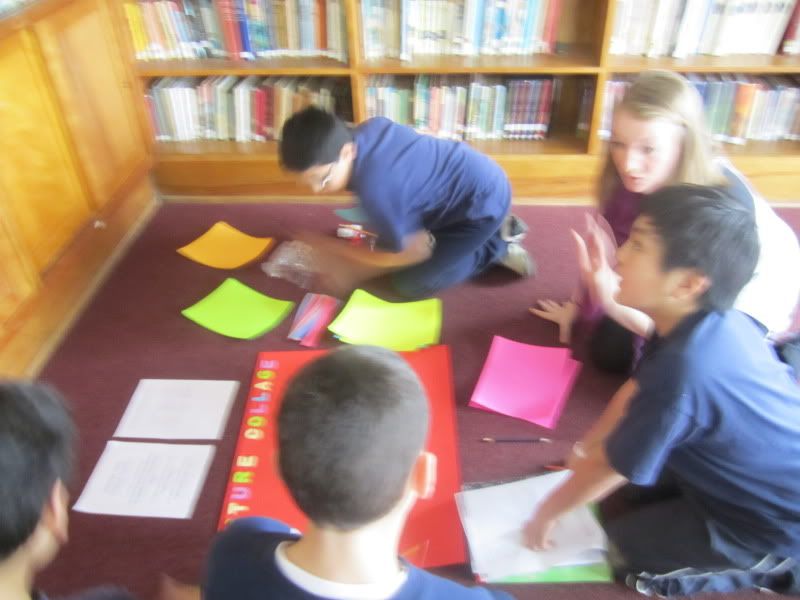
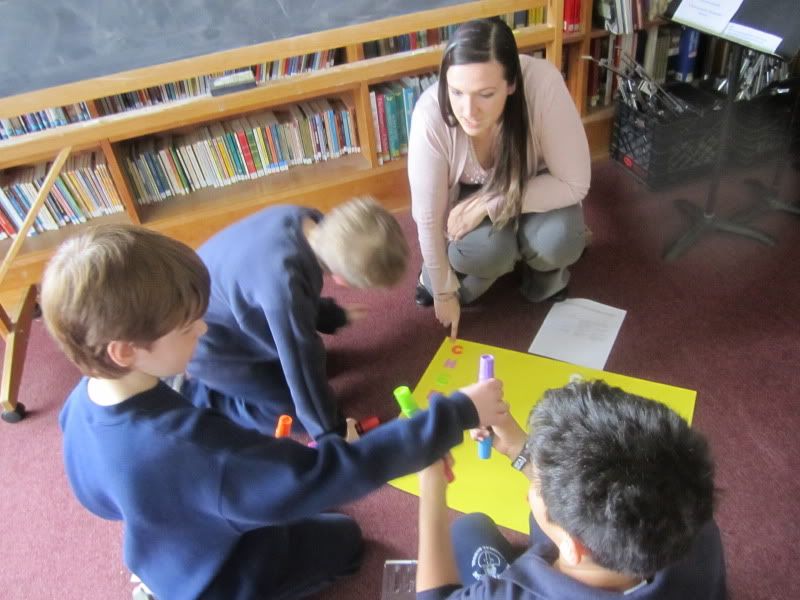
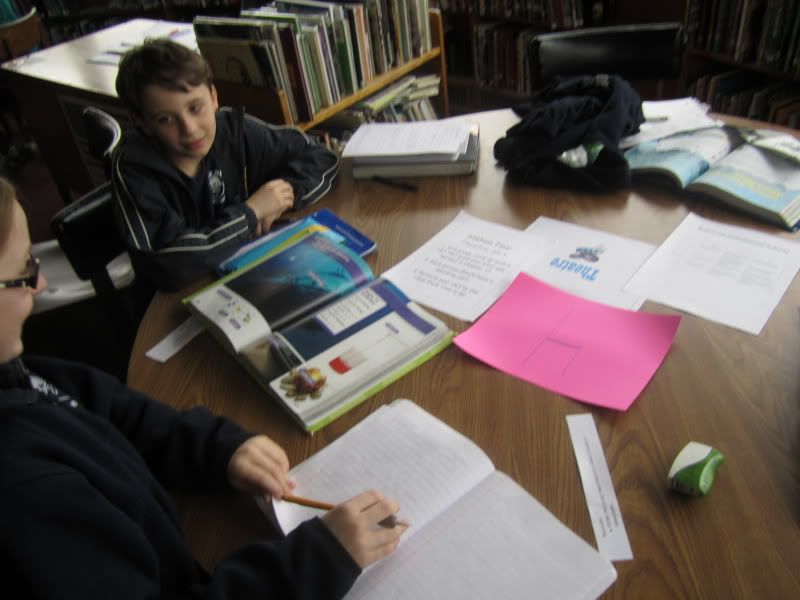
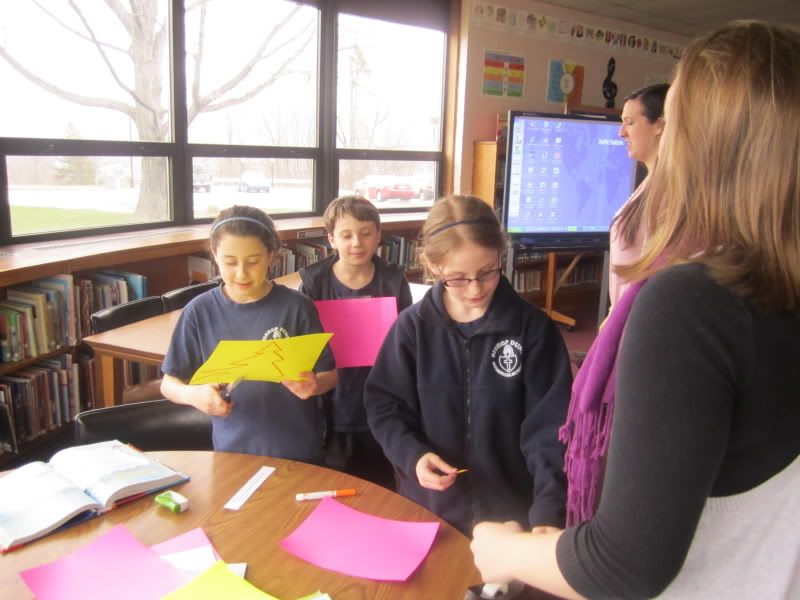
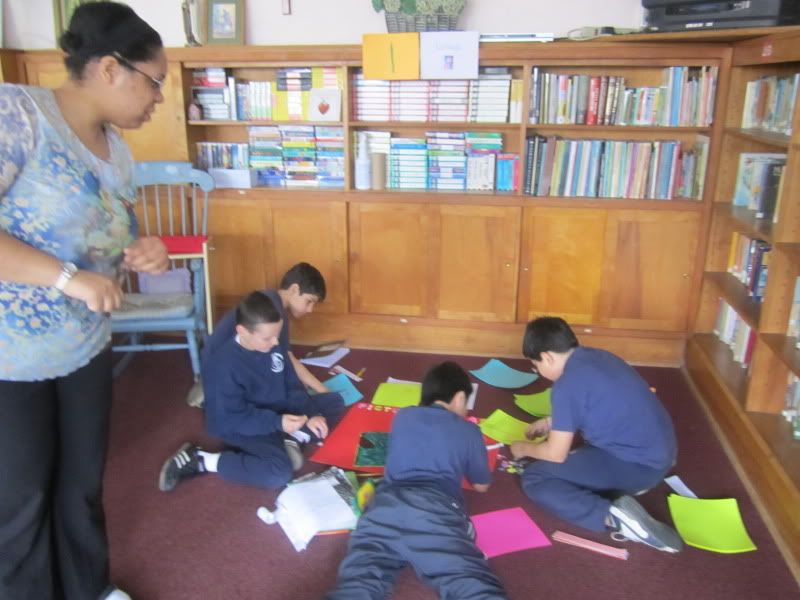
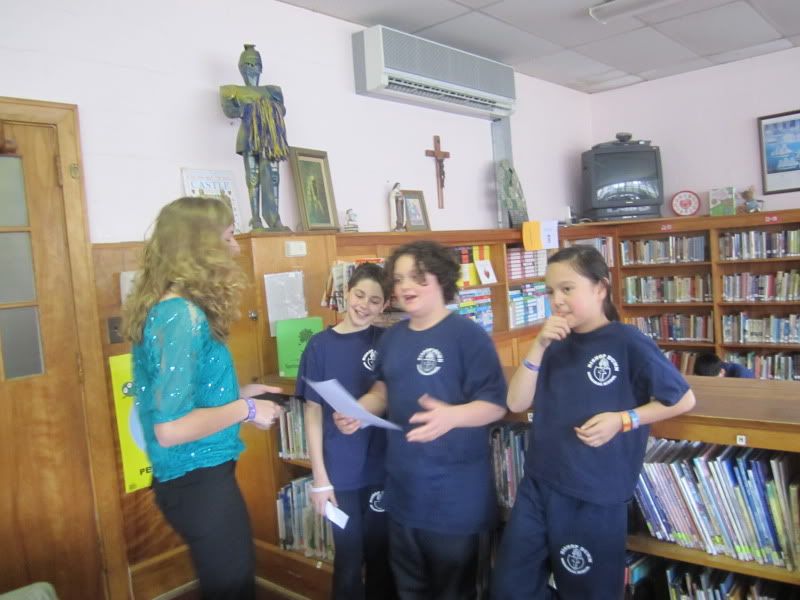
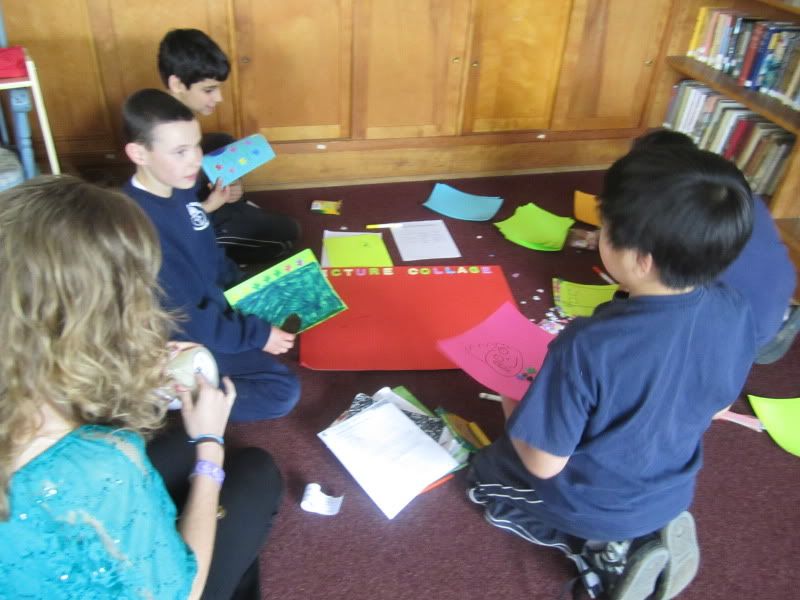
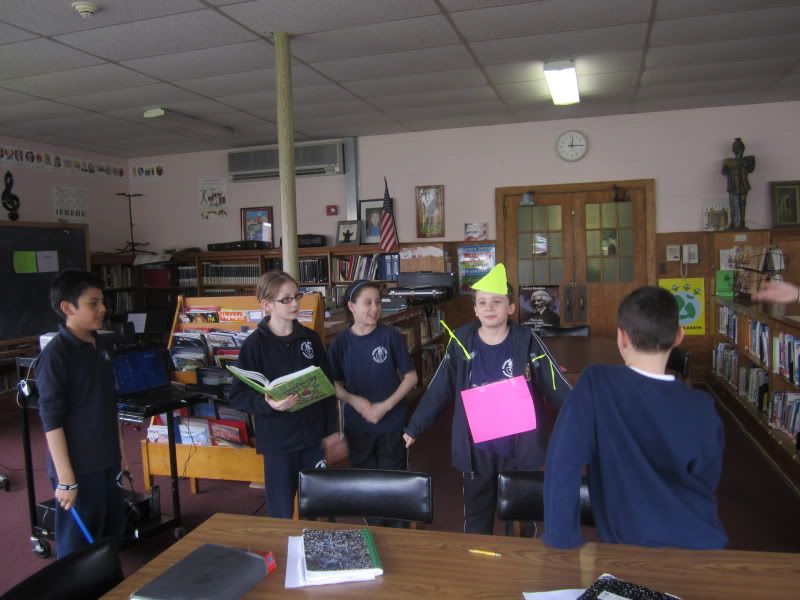
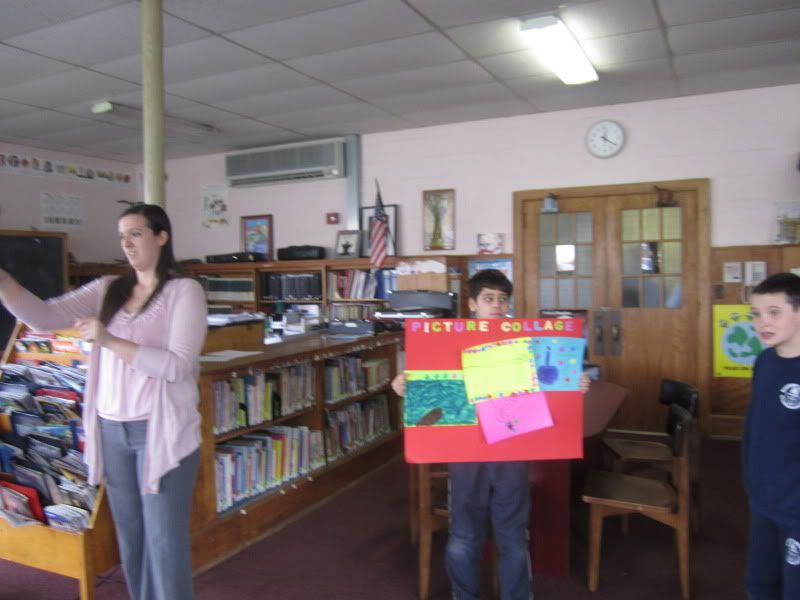
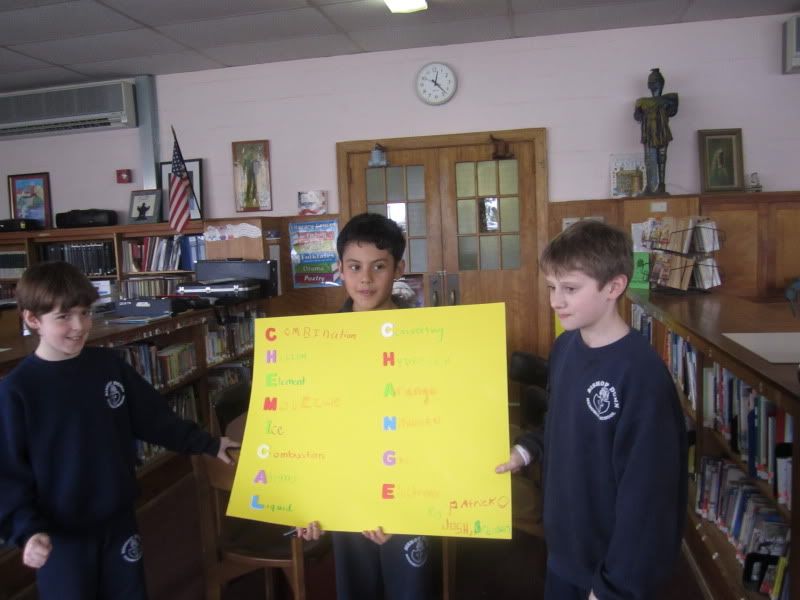
Now that field work is over I have had some time to reflect, working in Mrs. Benfer's 5th grade classroom. At first I was a little worried because it was very sudden, but when I got there everything seemed ready for us. Mrs. Benfer was prepared for us and had all of our sessions set up. Our very first session we were able to watch Mrs. Benfer introduce a lesson, which was on mixtures and solutions. We got to see how she engages her class and then lets them work on their own. After we watched her introduce the lesson and she allowed the students to observe, we got to work with them one on one. We each got a student or two and we watched them do the lab assignment based off what they saw. We were there for the students if they had questions but other than that we didn't really help them with their lab. The next session we helped them prepare for their open notes test that was coming up. Mrs. Benfer started the class by showing us her online textbook and how she practices with her students. It was a review game, girls vs. boys. This game was a fun way to get the students to activate their minds with some competition. Mrs. Benfer told us that the questions on the review game is their test. We did the chapter review with them that day. We were able to sit with them later that week when they took the test and we were there for questions and to encourage them but we could not tell them the answers. After that session we had to teach the class with lesson based off chapter 12. Originally i was going to do lesson one but I was not able to attend that class. It ended up being that Katharine and Jess were in the same situation. We ended up going together as a group and did a cumulative activity on chapter 12. We did a 4 corners activity where the students either, wrote a poem, acted out play from something given in the chapter, rapped a song, or drew a picture. Overall the activity went very well the students seemed to enjoy themselves and it was a good way to wrap up the unit.
Sunday, March 20, 2011
Super Full Moon
On Saturday March 19 there was a super full moon. This means the moon was the closest to the Earth in almost 20 years. Below is an article I found about the super full moon.
On March 19th, a full Moon of rare size and beauty will rise in the east at sunset. It's a super "perigee moon"--the biggest in almost 20 years.
"The last full Moon so big and close to Earth occurred in March of 1993," says Geoff Chester of the US Naval Observatory in Washington DC. "I'd say it's worth a look."
Full Moons vary in size because of the oval shape of the Moon's orbit. It is an ellipse with one side (perigee) about 50,000 km closer to Earth than the other (apogee). Nearby perigee moons are about 14% bigger and 30% brighter than lesser moons that occur on the apogee side of the Moon's orbit.
 A perigee full Moon brings with it extra-high "perigean tides," but this is nothing to worry about, according to NOAA. In most places, lunar gravity at perigee pulls tide waters only a few centimeters (an inch or so) higher than usual. Local geography can amplify the effect to about 15 centimeters (six inches)--not exactly a great flood.
 Indeed, contrary to some reports circulating the Internet, perigee Moons do not trigger natural disasters. The "super moon" of March 1983, for instance, passed without incident. And an almost-super Moon in Dec. 2008 also proved harmless.
Okay, the Moon is 14% bigger than usual, but can you really tell the difference? It's tricky. There are no rulers floating in the sky to measure lunar diameters. Hanging high overhead with no reference points to provide a sense of scale, one full Moon can seem much like any other.
The best time to look is when the Moon is near the horizon. That is when illusion mixes with reality to produce a truly stunning view. For reasons not fully understood by astronomers or psychologists, low-hanging Moons look unnaturally large when they beam through trees, buildings and other foreground objects. On March 19th, why not let the "Moon illusion" amplify a full Moon that's extra-big to begin with? The swollen orb rising in the east at sunset may seem so nearby, you can almost reach out and touch it.
Don't bother. Even a super perigee Moon is still 356,577 km away. That is, it turns out, a distance of rare beauty.
On March 19th, a full Moon of rare size and beauty will rise in the east at sunset. It's a super "perigee moon"--the biggest in almost 20 years.
"The last full Moon so big and close to Earth occurred in March of 1993," says Geoff Chester of the US Naval Observatory in Washington DC. "I'd say it's worth a look."
Full Moons vary in size because of the oval shape of the Moon's orbit. It is an ellipse with one side (perigee) about 50,000 km closer to Earth than the other (apogee). Nearby perigee moons are about 14% bigger and 30% brighter than lesser moons that occur on the apogee side of the Moon's orbit.

Above: Perigee moons are as much as 14% wider and 30% brighter than lesser full Moons. "The full Moon of March 19th occurs less than one hour away from perigee--a near-perfect coincidence1 that happens only 18 years or so," adds Chester.
The Moon looks extra-big when it is beaming through foreground objects--a.k.a. "the Moon illusion."
Okay, the Moon is 14% bigger than usual, but can you really tell the difference? It's tricky. There are no rulers floating in the sky to measure lunar diameters. Hanging high overhead with no reference points to provide a sense of scale, one full Moon can seem much like any other.
The best time to look is when the Moon is near the horizon. That is when illusion mixes with reality to produce a truly stunning view. For reasons not fully understood by astronomers or psychologists, low-hanging Moons look unnaturally large when they beam through trees, buildings and other foreground objects. On March 19th, why not let the "Moon illusion" amplify a full Moon that's extra-big to begin with? The swollen orb rising in the east at sunset may seem so nearby, you can almost reach out and touch it.
Don't bother. Even a super perigee Moon is still 356,577 km away. That is, it turns out, a distance of rare beauty.
Thursday, March 17, 2011
Chapter 3
1. I think this quotation means that students and people learn on their own. It doesn't matter how many times something is explained or shown, it is up to them to push themselves to participate, to read, to experiment, or do whatever they are comfortable with to understand the material. In order to learn you have to put yourself out there and be part of the lesson. You can't just sit behind a desk listen to the teacher once and say you learned the material.
2. I have written answers that I thought my teacher would like just because I was scared to speak my mind. I always thought that we were not allowed to disagree with the teacher until I was in the middle of my high school years and I decided to speak up. I feel that it is very common to put an answer down just because they think the teacher wants that. I think this because there are people like me who are afraid to go against the teacher. In reality teachers like when their students form an opinion and speak their mind and a lot of times teachers play opposite sides to start a discussion with the class.
3. I think Mr. Wilson didn't correct the procedure so his students could learn from their mistakes. If he had corrected i right on the spot and stopped the students from continuing on with their plan, then they wouldn't learn, would experience, and wouldn't experiment and the whole lab would be a waste of time.
4. I could bring in rocks, fossils, seeds from trees, flowers, maybe even a cat I have a whole garage of stray cats =)
2. I have written answers that I thought my teacher would like just because I was scared to speak my mind. I always thought that we were not allowed to disagree with the teacher until I was in the middle of my high school years and I decided to speak up. I feel that it is very common to put an answer down just because they think the teacher wants that. I think this because there are people like me who are afraid to go against the teacher. In reality teachers like when their students form an opinion and speak their mind and a lot of times teachers play opposite sides to start a discussion with the class.
3. I think Mr. Wilson didn't correct the procedure so his students could learn from their mistakes. If he had corrected i right on the spot and stopped the students from continuing on with their plan, then they wouldn't learn, would experience, and wouldn't experiment and the whole lab would be a waste of time.
4. I could bring in rocks, fossils, seeds from trees, flowers, maybe even a cat I have a whole garage of stray cats =)
Tuesday, February 22, 2011
Micro Teaching
Today I got to micro teach for the beginning of class. I was nervous to get up in the front of class but Dr. S was supportive. The night before we sat on Google Docs for a good hour+ discussing how I should attack the lesson today. She saw that I had used wordle to title a couple of my papers, so suggested that I could do a wordle for my micro teacher. I took important words from week 5 of moodle and off the power point to put in wordle. In order for the words to be big I had to write them over and over again. The word "science" was the biggest on my wordle and that's because I wrote it about 20 times. Then I wrote the other words a different amount of times to make them different sizes but big enough to be seen on the board. The color scheme is important because they have to be easy to see on the board. There can't be anything dark so they should be bright and inviting. When I got in front of the class I introduced the lesson by saying I created a word cloud, and asked my peers to pick out two words they knew. Each person told me one word they knew off the board. After everyone spoke I concluded the lesson by saying that the answers they had given me has proved that they know how to connect these words to everyday life, and that our class is about connecting the students life to science. Overall I felt like the lesson went well, and I'm so appreciative of how Dr. S helped me through the entire thing!
Below are the wordles I made for my micro teaching:

Below are the wordles I made for my micro teaching:
The video above is an example of micro teaching in the classroom.
Monday, February 21, 2011
Wordle
What is a wordle? A wordle is a graphic representation of the most frequently used words in a blog, free write, or speech, and Wordle is the site to do that. It’s simple, fun and creative. To create a wordle, simply go to Wordle and click create. Enter a bunch of text into the box by either copying and pasting it from an article or paper, or just typing your own words; hit submit and let the site do the rest. After creating the wordle, users are able to customize the look of it. Options range from color to size and shape. One of the benefits of using a wordle in blog is that it adds variety—allowing readers to see what you’re most passionate about in a creative way.
In wordle you can get the html link to the picture by saving to a public library. The html will be under the wordle. The bad thing about that is once you "x" out of it you will probably never see that wordle again because so many people save ever second. If you want to keep your wordle for the future you have to save it as a print screen. In order to do that hit the "print screen" button on your keyboard. This makes a snapshot of what your screen looks like. Paste it into paint or anything you can edit, by pressing "cntrl" and "v" at the same time. Just crop out the wordle or what you want from it and save it as the individual wordle. Now that your wordle is ready to go upload it to where you want to use it and there it is.
Some examples of my made wordles:


In wordle you can get the html link to the picture by saving to a public library. The html will be under the wordle. The bad thing about that is once you "x" out of it you will probably never see that wordle again because so many people save ever second. If you want to keep your wordle for the future you have to save it as a print screen. In order to do that hit the "print screen" button on your keyboard. This makes a snapshot of what your screen looks like. Paste it into paint or anything you can edit, by pressing "cntrl" and "v" at the same time. Just crop out the wordle or what you want from it and save it as the individual wordle. Now that your wordle is ready to go upload it to where you want to use it and there it is.
How to Create a Wordle:
How to Use Wordle in the Classroom:
This Wordle is made from my blog post:


Wednesday, February 16, 2011
"BUGS"

When we think about science in the classroom, there is a sense of dread. Many students do not like science because of everything that is involved with it. Recently it seems that science, math, and technology have fallen to the bottom of the love list in school. The sad part about it is that few girls show any interest in these subjects at all. The article “Bringing Up Girls in Science (BUGS): The Effectiveness of an Afterschool Environmental Science Program for Increasing Female Students’ Interest in Science Careers” talks about the importance of getting girls involved in the program.
BUGS was an after school program for 4th and 5th grade girls; that “ provided authentic learning experiences in environmental science as well as valuable female mentoring opportunities in an effort to increase participants’ academic achievement in science” (Tandra Tyler-Wood) . This program was meant to get girls interested in the field in hopes they would be successful later in their lives. The participants of BUGS graduated high school and went to college, with many of them going into majors dealing with: science, math, or technology. They compared the girls in the BUGS program to four groups of girls who did not go through the program and saw different results. The results showed that the girls who did not go through the program had a lower amount of people in the science, math, and technology majors.
This research informs me that by being a teacher, you have to educate your students in the subjects that are not the favorites. You can do this by making the subjects enjoyable and fun. You really want your students to come back excited to learn. I feel that these three subjects are good for hands on activities. Science especially, has so many opportunities to learn besides through a textbook. There are many places that would be good to go on for a field trip like: Liberty Science Center or even a children’s science museum.
I chose this article because I felt that girls need to get involved in science. By knowing this information I can prepare my activities so that all the students can enjoy the lesson. I can’t just focus my attention on just the girls but I can try and get them more active in the classroom.
Bibliography
Tandra Tyler-Wood, A. E. (n.d.). Bringing Up Girls in Science (BUGS): The Effectiveness of an Afterschool Environmental Science Program for Increasing Female Students’ Interest in Science Careers . Journal of Science Education and Technology .
*This is my Ed Article for class
Tuesday, February 8, 2011
Psychedelica
The New Frogfish!


When one thinks of the word fish they think of something that lives in the water, swims around with fins, and has gills. When one thinks of a frog they think of an amphibian, which has a long tongue to catch insects. Has anyone ever thought of the two together? Probably not. It’s an interesting conception to think of a frog and a fish together. Are they really something that was put together or is it an animal that has similar features of both creatures?
Off the coast of an Indonesia Island divers found an interesting look fish. It hoped, crawled, and swam. It was something they had never seen before. The divers took pictures of the fish and sent them to fish expert Ted Pietsch of forty years. After examining the pictures carefully Pietsch came to the conclusions that the fish was unnamed. He went into his collection and compared it to pictures he had from 2008. They were the same fish species that was not known. He said that it was a frogfish but a new species of it. He named the new species Histiophryne psychedelica, or psychedelica for short. The psychedelica is about four inches long, with swirls and stripes like a tiger. The fish hops along the coral reef by squirting jets of water out from itself. This gives it the appearance of it hoping rather than swimming. This is the first frogfish that has been seen to hop. They crawl by using their fins. Their fins look and work like legs which explain why they like to crawl along the reef rather than swim. With these two features the fish gets into a rhythm of crawl-hop-crawl-hop. Another interesting aspect that applies only to this creature is that it has eyes that face forward. On a fish the face is pointed and angled. They have two eyes on either side of their face. The frogfish has a flat face with eyes directly on it just like a human. A lot of fish that live on the reef have camouflage to protect them. The psychedelica does not change even though the known frogfish does. Its color and design stays with them no matter what.
What’s interesting about the psychedelica is that there have been pictures of it from years ago. At time no one knew what it was and the pictures were put to the side. Looking back at his photos, Pietsch found pictures sent from the Dallas Aquarium with pictures of the fish he just named. Those pictures were taken about seventeen years ago.
I chose this article because I always found the ocean fascinating. There are so many creatures that have yet to be discovered because we do not have the technology of going all the way to the bottom of the ocean. I could bring this into the classroom to teach science by asking students to use their imagination. I could ask them to draw something they believe is in the ocean but has not yet been discovered. We can go through the different levels of the ocean and what is known about what lives there. This topic can open a big discussion that will allow students to get involved.

The Psychedlica in Action!
Sunday, February 6, 2011
Moon Phases

On Thursday February 3, the moon was a new moon.
February -- Snow Moon

Friday February 4, 2011
For Friday February 4, there was a slight sliver that was not noticeable in the sky.
Waxing Crescent

Saturday February 5, 2011
On Saturday the sliver was a little thinker but again was not noticeable in the sky. There was a very faint outline.

Sunday February 6, 2011
On Sunday the crescent was thicker still but only a faint outline was visible

Monday February 7, 2011
The moon was finally visible! But only for a short time before the clouds came in. I saw a crescent starting on its way to a half moon.

Tuesday February 8, 2011
Thankfully I can see the moon and the stars. It's nice to be able to see the sky without cloud cover.

Wednesday February 9, 2011
The crescent moon is becoming bigger and brighter.

Thursday February 10, 2011
I think one more day and the moon will be a full moon!

Friday February 11, 2011
It's a HALF moon!! And I was able to see it off my deck at home. A nice clear night!
First Quarter
First Quarter

Saturday February 12, 2011
We're on our way to the full moon.

Sunday February 13, 2011
Waxing Gibbous

Monday February 14, 2011


 Thursday February 24


 Friday March 4
New Moon


 Thursday March 17

 Saturday March 19
Super Full Moon


Tuesday February 15

Wednesday February 16

Thursday February 17

Friday February 18
Full Moon!

Saturday February 19
Wanning Gibbous

Sunday February 20

Monday February 21

Tuesday February 22

Wednesday February 23


Friday February 25
Last Quarter

Saturday February 26
Wanning Crescent

Sunday February 27

Monday February 28
March -- Sap Moon

Tuesday March 1

Wednesday March 2

Thursday March 3

New Moon

Saturday March 5

Sunday March 6

Monday March 7

Tuesday March 8

Wednesday March 9

Thursday March 10

Friday March 11

Saturday March 12

Sunday March 13

Monday March 14

Tuesday March 15

Wednesday March 16


Thursday March 18

Super Full Moon

Subscribe to:
Posts (Atom)